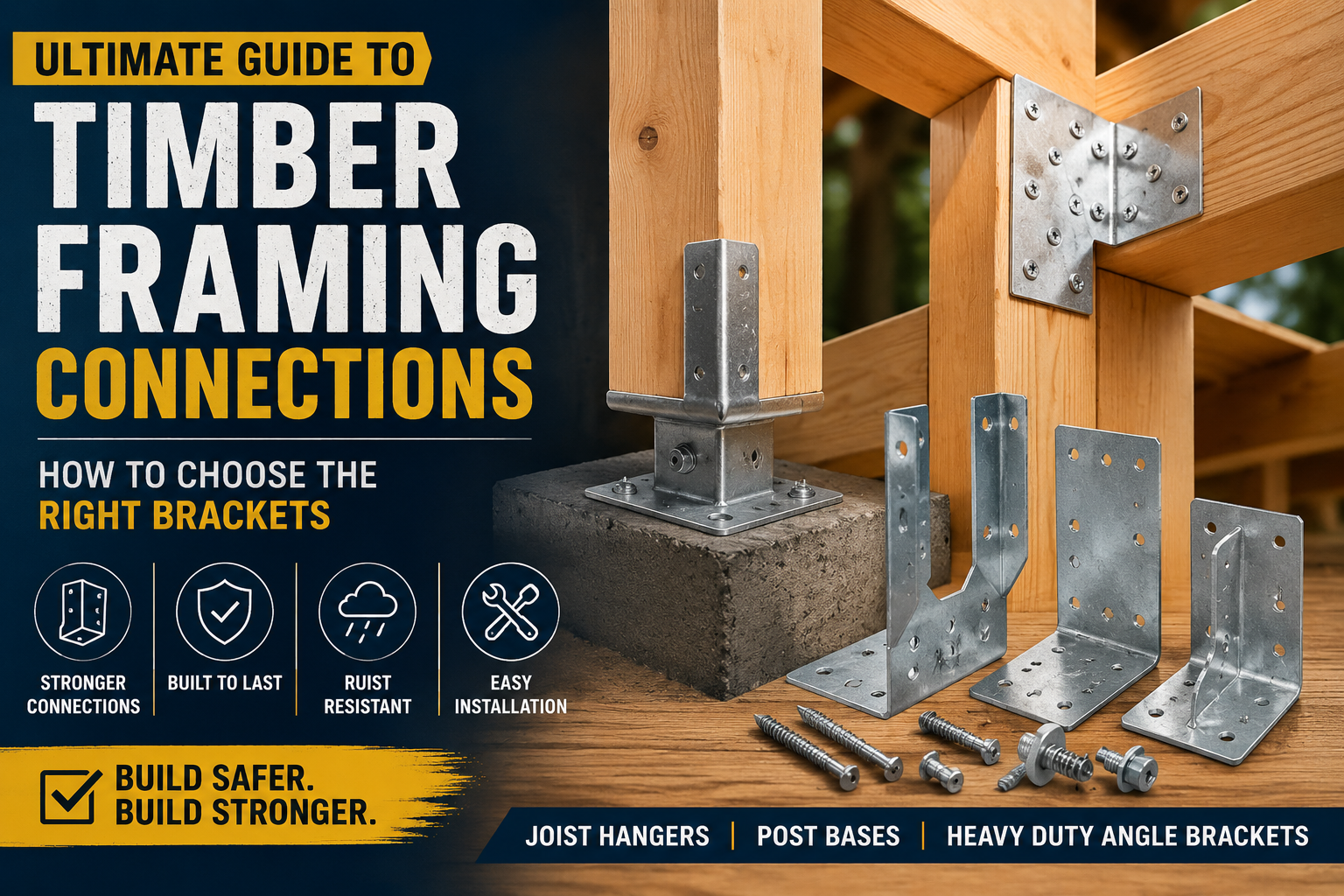
Ultimate Guide to Timber Framing Connections: How to Choose the Right Brackets
Focus Keyword: timber framing connectors, heavy duty angle brackets
Timber structures such as roofing systems, pergolas, decking, and outdoor frameworks rely heavily on strong and reliable joints. The durability, safety, and long-term performance of any wooden structure depend on the quality of its timber framing connectors.
Choosing the right hardware is not just a construction detail—it is a structural necessity.
In this guide, we will break down the different types of framing connectors, material considerations, and common installation mistakes to help you make the right decision for your project.
Why Timber Framing Connections Matter
In any timber structure, joints are the weakest points if not properly reinforced. Whether you’re building a pergola or a load-bearing roof frame, proper framing connectors ensure:
- Structural stability under load
- Resistance against wind and movement
- Long-term durability of wood joints
- Safety of the entire structure
Without strong connectors, even high-quality timber can fail over time.
Types of Timber Framing Connectors
1. Joist Hangers
Joist hangers support horizontal beams (joists) and attach them securely to vertical structures.
Best for:
- Decking systems
- Floor framing
- Ceiling joists
They ensure precise alignment and distribute weight evenly.
2. Post Bases
Post bases secure vertical timber posts to concrete or steel foundations.
Best for:
- Pergolas
- Deck posts
- Outdoor structures
They prevent direct wood-to-ground contact, reducing moisture damage and rot.
3. Heavy Duty Angle Brackets
Heavy duty angle brackets reinforce right-angle timber joints.
Best for:
- Roof framing
- Shed construction
- Corner reinforcement
- Structural timber joints
They provide additional strength where two beams meet at 90 degrees.
Material Matters: Why Steel Quality Is Important
Galvanized Steel
- Highly resistant to corrosion
- Ideal for outdoor use
- Best for humid or rainy environments
Powder-Coated Brackets
- Extra protective layer against rust
- Clean, professional finish
- Long-lasting in exposed conditions
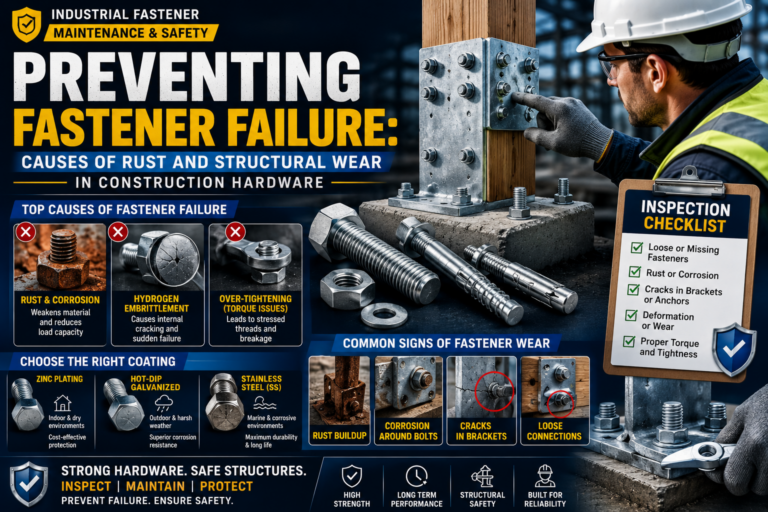
Low-quality steel can rust quickly and weaken structural integrity.
Common Installation Mistakes to Avoid
1. Incorrect Fasteners
Always use manufacturer-approved screws or bolts.
2. Wrong Spacing
Improper spacing reduces load distribution efficiency.
3. Tightening Errors
Over-tightening damages timber; under-tightening weakens joints.
4. Ignoring Load Ratings
Every connector has a structural load limit—never exceed it.
Best Practices for Strong Timber Framing
- Use certified timber framing connectors
- Prefer galvanized or powder-coated steel
- Follow structural spacing guidelines
- Use proper installation tools
Conclusion
Strong timber structures depend on strong connections. Choosing the right heavy duty angle brackets and framing connectors ensures safety, durability, and long-term performance.
Invest in high-quality, tested hardware to build structures that last for years without compromise.