Introduction
In construction and structural engineering, fasteners play a critical role in maintaining the integrity of joints and load-bearing connections. When fasteners fail, the result can range from minor structural loosening to severe safety hazards and complete structural collapse.
Most failures are not sudden—they develop over time due to corrosion, mechanical stress, or improper installation. Understanding fastener failure causes is essential for inspectors, engineers, and builders to ensure long-term structural safety.
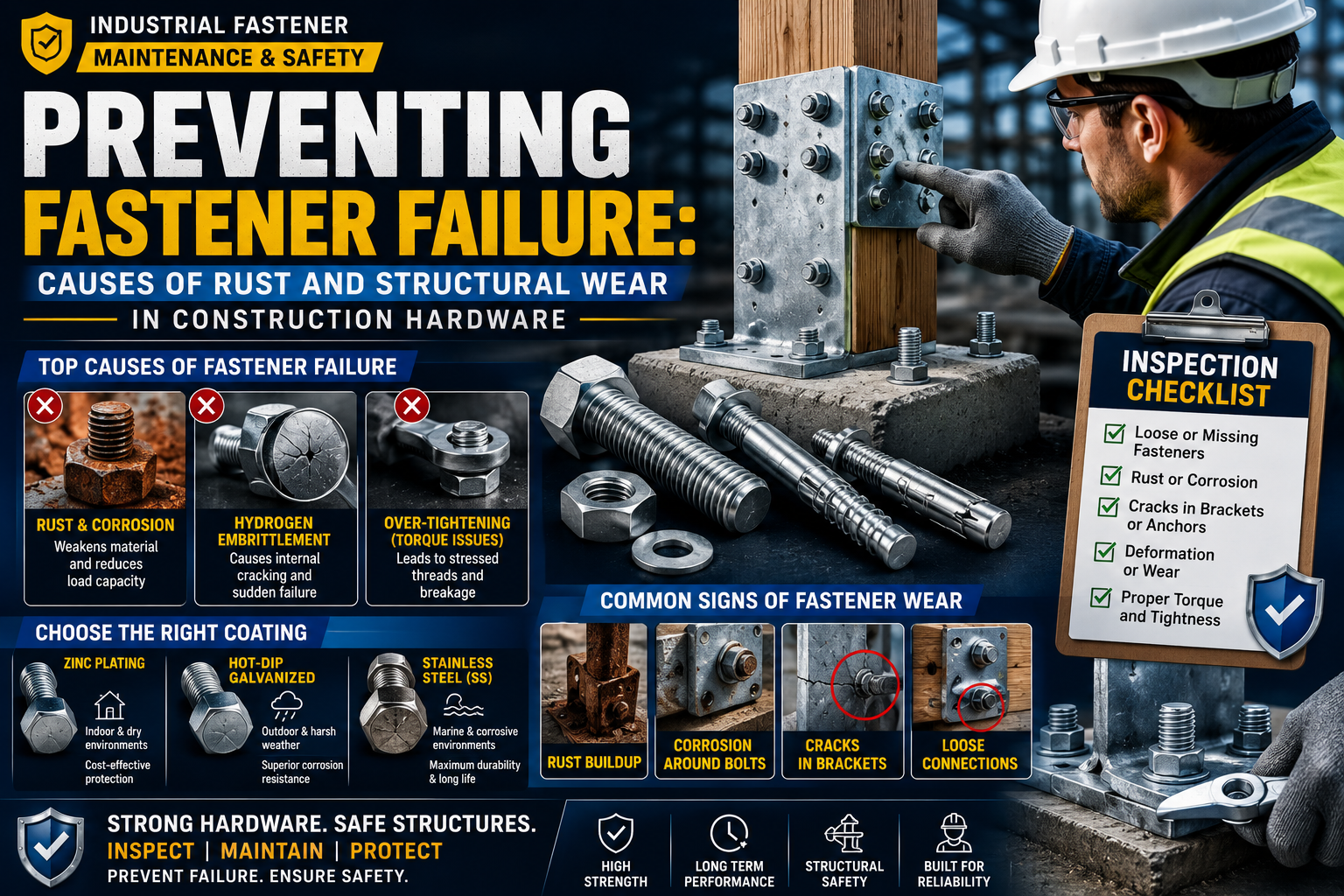
Top Causes of Fastener Failure
Fastener degradation typically occurs due to a combination of chemical, mechanical, and environmental factors.
1. Hydrogen Embrittlement
Hydrogen embrittlement occurs when hydrogen atoms penetrate the metal structure, reducing ductility and making the fastener brittle.
- Common in high-strength steel fasteners
- Often introduced during electroplating or chemical processing
- Can lead to sudden, unpredictable fracture under load
This type of failure is particularly critical in high-stress structural applications.
2. Over-Tightening (Torque Issues)
Improper installation torque is one of the most common causes of fastener damage.
- Excessive torque can stretch or deform threads
- Leads to reduced load-carrying capacity
- Can cause thread stripping or bolt fracture
Using calibrated torque tools is essential in structural assemblies to maintain correct preload conditions.
3. Galvanic Corrosion
Galvanic corrosion occurs when two dissimilar metals are in electrical contact in the presence of moisture.
- Accelerated corrosion at the interface
- Common in mixed-metal construction environments
- Leads to rapid degradation of one metal component
Proper material pairing is required to avoid electrochemical reactions.
How to Choose the Right Coating
Selecting the correct protective coating is a key factor in structural hardware rust prevention. The environment determines which protection system should be used.
Zinc Plating
- Thin protective layer applied through electroplating
- Suitable for indoor or low-exposure environments
- Provides basic corrosion resistance
Hot-Dip Galvanization
- Thick zinc coating applied by immersion in molten zinc
- High durability in outdoor and harsh environments
- Commonly used in structural steel and fencing hardware
Stainless Steel
- Contains chromium that forms a passive corrosion-resistant layer
- Best for highly corrosive environments (marine, chemical exposure)
- Higher cost but longest service life
Selection must always be based on exposure conditions, load requirements, and service life expectations.
Inspection Checklist for Structural Hardware
Regular inspection helps detect early signs of degradation before failure occurs.
Visual Inspection
- Check for rust formation or discoloration
- Inspect coating damage or peeling
- Look for deformation in brackets and anchors
Mechanical Check
- Verify tightness of bolts and fasteners
- Check for movement or loosened joints
- Confirm correct torque levels where applicable
Environmental Assessment
- Identify moisture exposure areas
- Check for metal contact between dissimilar materials
- Assess chemical or salt exposure risks
Routine inspection schedules significantly reduce long-term structural risks.
Conclusion
Fastener reliability is directly linked to material selection, installation accuracy, and maintenance practices. Most structural failures can be prevented by understanding fastener failure causes and applying proper engineering controls.
Using the correct coating system, avoiding installation errors, and performing regular inspections are key strategies for effective structural hardware rust prevention.
In long-term construction safety, consistent monitoring and correct hardware selection are far more effective than reactive repairs after failure occurs.