Introduction
In heavy-load construction and industrial applications, selecting the right fastener is not just a detail—it directly impacts structural safety, durability, and long-term performance. A wrong bolt choice can lead to joint failure, reduced load capacity, and costly maintenance.
Among commonly used structural fasteners, the debate of coach bolts vs hex bolts is highly relevant for engineers, procurement managers, and fabricators working on timber, steel, and hybrid structures.
This guide breaks down both bolt types in a practical, engineering-focused way.
What are Coach Bolts (Carriage Bolts)?
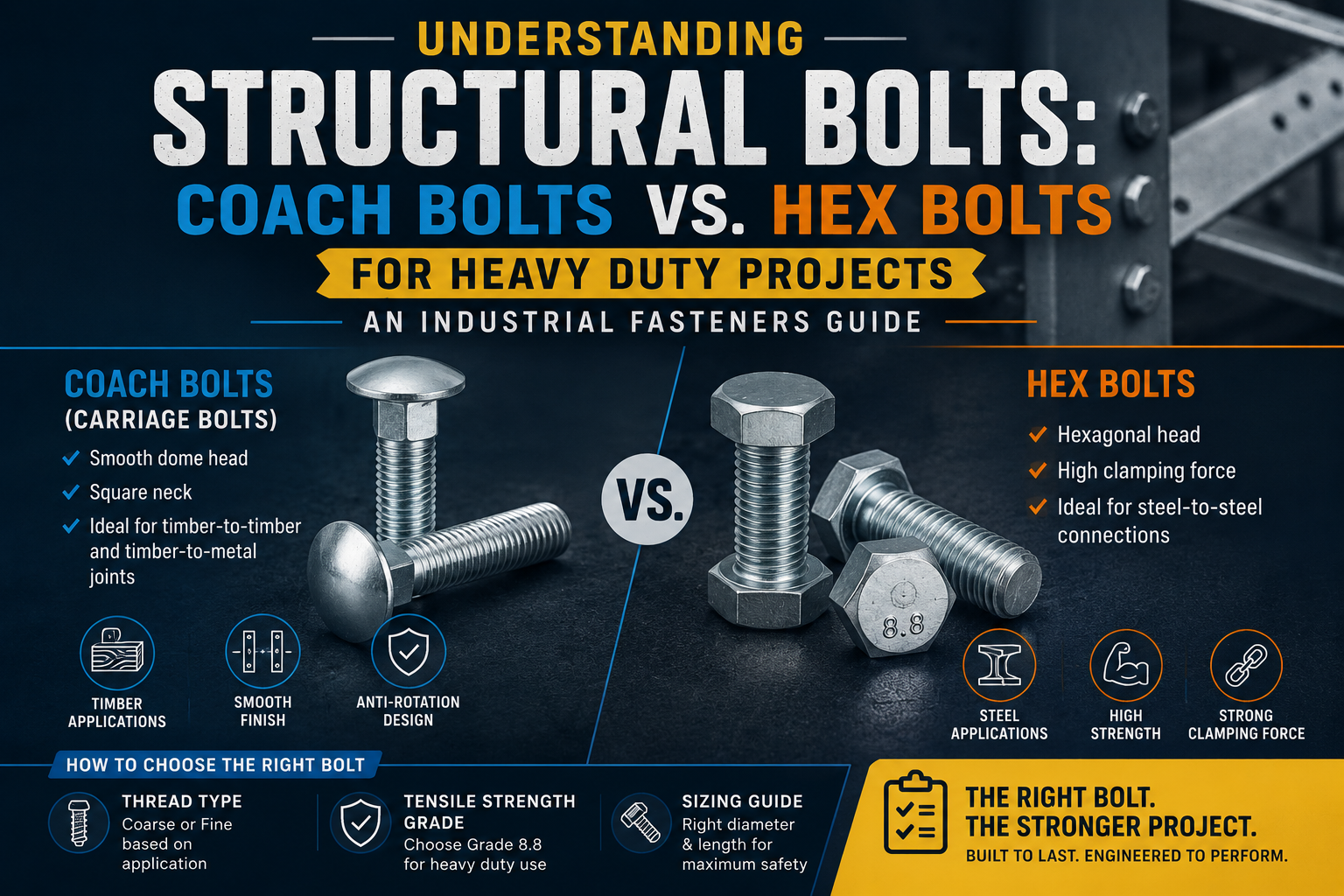
Coach bolts, also known as carriage bolts, are designed for applications where a smooth and secure finish is required.
Key Design Features:
- Dome-shaped smooth head (no external drive after installation)
- Square neck under the head prevents rotation during tightening
- Fully or partially threaded shank
How They Work:
When inserted into a pre-drilled hole, the square neck grips into the material (usually wood), preventing the bolt from spinning while the nut is tightened from the opposite side.
Common Applications:
- Timber-to-timber joints
- Timber-to-metal connections
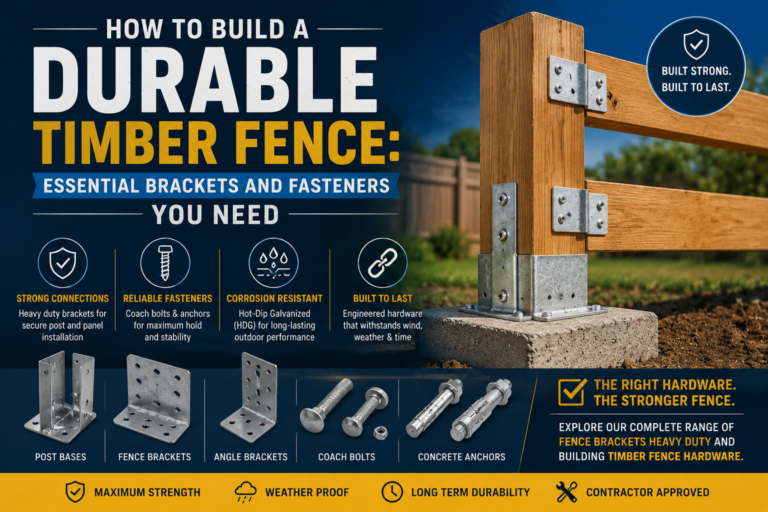
- Decking, fencing, and wooden structural frames
- Furniture and light structural assemblies
Advantages:
- Clean, tamper-resistant finish
- Easy installation from one side
- Good grip in soft materials like wood
What are Hex Bolts?
Hex bolts are one of the most widely used industrial fasteners in steel and heavy engineering structures.
Key Design Features:
- Hexagonal head for wrench or socket tightening
- Fully threaded or partially threaded body
- Available in multiple strength grades (e.g., 4.6, 8.8, 10.9, 12.9 as per ISO standards)
How They Work:
Hex bolts are designed to deliver high clamping force, making them suitable for metal-to-metal structural connections where load distribution is critical.
Common Applications:
- Steel structures and frameworks
- Machinery assembly
- Automotive and mechanical engineering
- Bridges and industrial plants
Advantages:
- High tensile strength options available
- Suitable for heavy-duty load-bearing joints
- Compatible with washers and lock nuts for secure fastening
Coach Bolts vs Hex Bolts: Key Differences ⚖️
| Feature | Coach Bolts | Hex Bolts |
|---|---|---|
| Head Type | Smooth dome head | Hexagonal head |
| Installation | One-sided tightening | Requires wrench access |
| Primary Use | Wood and light structures | Steel and heavy-duty structures |
| Strength | Moderate | High (depending on grade) |
| Anti-rotation | Square neck grip | Depends on friction + locking methods |
| Industrial Use | Limited | Extensive |
How to Choose the Right Bolt
Choosing between coach bolts and hex bolts depends on engineering requirements:
1. Material Type
- Wood-based structures → Coach bolts
- Steel structures → Hex bolts
2. Load Requirements
- Light to medium load → Coach bolts
- High tensile and shear load → Hex bolts
3. Strength Grade
For hex bolts:
- Grade 8.8 → Medium-high strength industrial use
- Grade 10.9 / 12.9 → High-performance machinery and structural applications
4. Joint Design
- Visible smooth finish required → Coach bolts
- Maximum mechanical strength required → Hex bolts
5. Corrosion Environment
- Outdoor or marine environments → Use galvanized or stainless steel variants
Conclusion
In structural engineering and industrial procurement, fastener selection plays a critical role in system reliability. Coach bolts are ideal for clean, wood-based structural assemblies, while hex bolts dominate heavy-duty steel and mechanical applications due to their superior strength and versatility.
Choosing the correct bolt type, material grade, and size ensures longer service life, improved safety, and reduced maintenance costs in any project.