Introduction
Timber fences are widely used in residential and commercial landscaping because they are cost-effective and visually adaptable. However, outdoor structures are continuously exposed to wind load, moisture, and ground movement. If the hardware used in construction is not properly selected, fences can weaken, deform, or fail over time.
This is why selecting the correct building timber fence hardware is essential for structural stability and long-term performance.
The Role of Fence Brackets
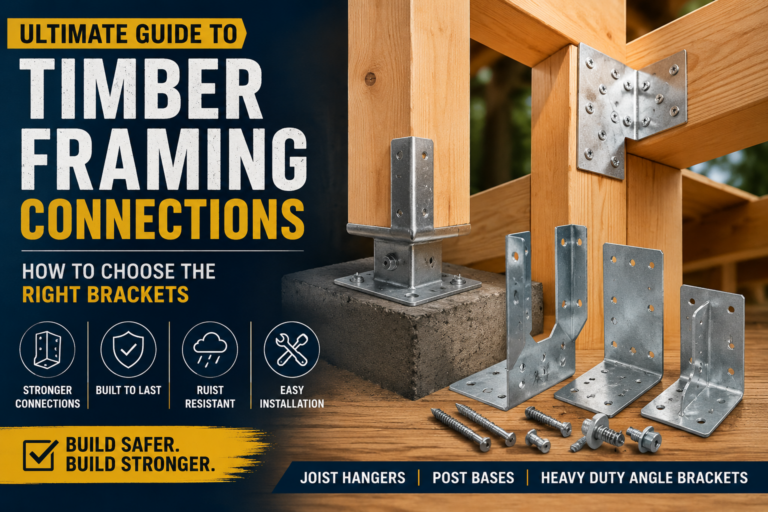
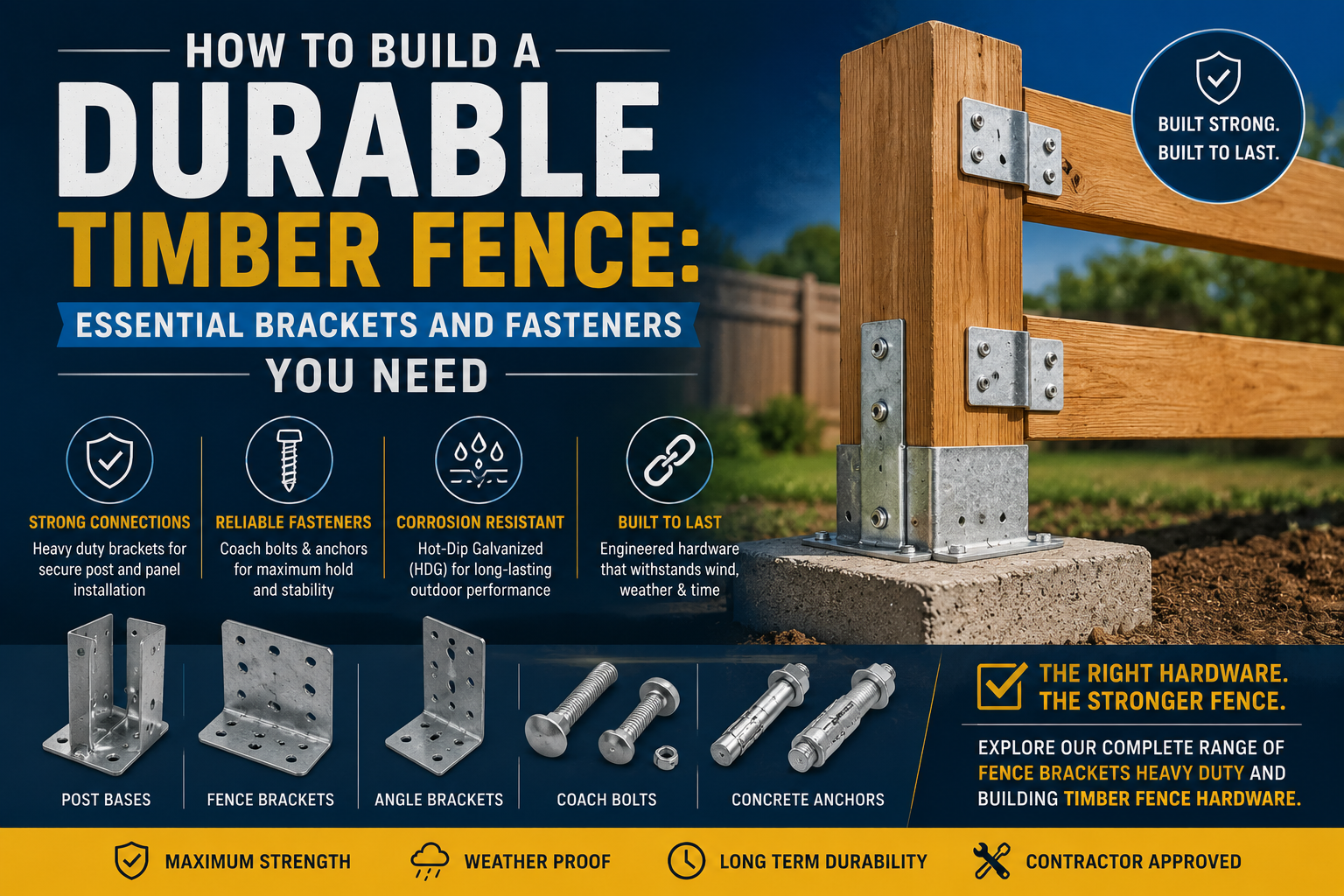
Fence brackets are a core structural element in timber fencing systems. They provide the mechanical connection between posts, rails, and panels, ensuring the structure remains stable under load.
Fence brackets heavy duty are specifically designed to handle outdoor stress conditions such as wind pressure and lateral movement.
Key Functions
- Secure timber posts to horizontal rails
- Maintain alignment of fence panels under pressure
- Distribute load evenly across structural joints
- Reduce movement and vibration caused by wind
Applications
Fence brackets are commonly used in:
- Post-to-rail connections
- Fence panel mounting systems
- Gate reinforcement points
- Corner structural joints
Proper bracket selection directly impacts the rigidity and lifespan of the fence system.
Why Coach Bolts and Concrete Anchors are Vital
A strong fence depends not only on brackets but also on the anchoring system and fasteners used in assembly.
Coach Bolts in Fence Construction
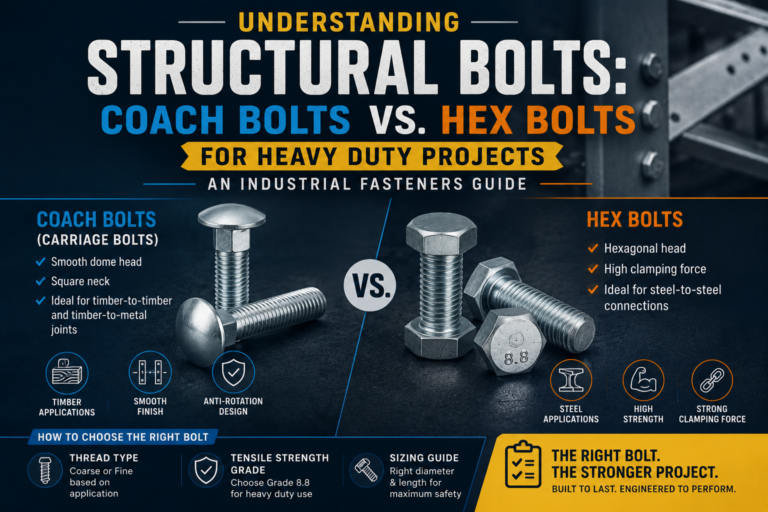
Coach bolts are widely used for timber connections due to their structural reliability.
- Square neck prevents rotation during tightening
- Suitable for timber-to-timber and timber-to-metal joints
- Provides strong mechanical locking for fence assembly
They are commonly used in assembling fence panels and securing rails to posts.
Concrete Anchors for Fence Posts
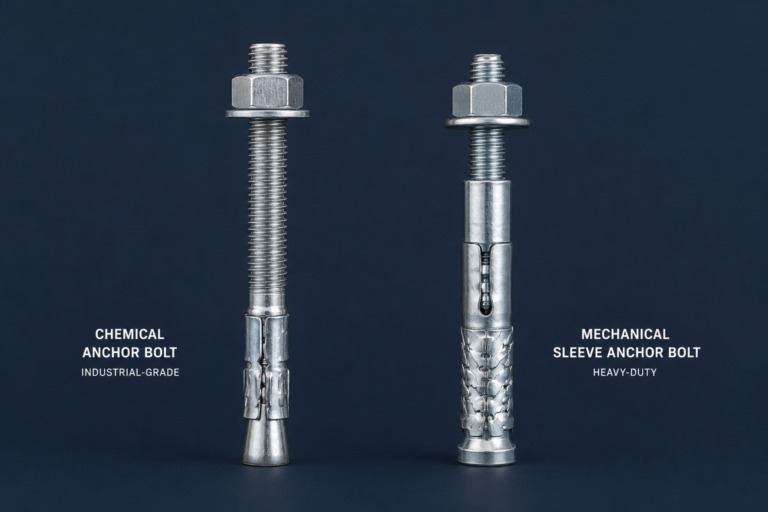
Fence stability begins at the foundation. Concrete anchors are used to secure post bases into concrete footings.
- Prevent uplift caused by wind load
- Resist lateral movement and ground pressure
- Ensure long-term structural stability of fence posts
In professional fencing systems, concrete anchoring is essential for permanent installations.
Corrosion Resistance in Outdoor Hardware
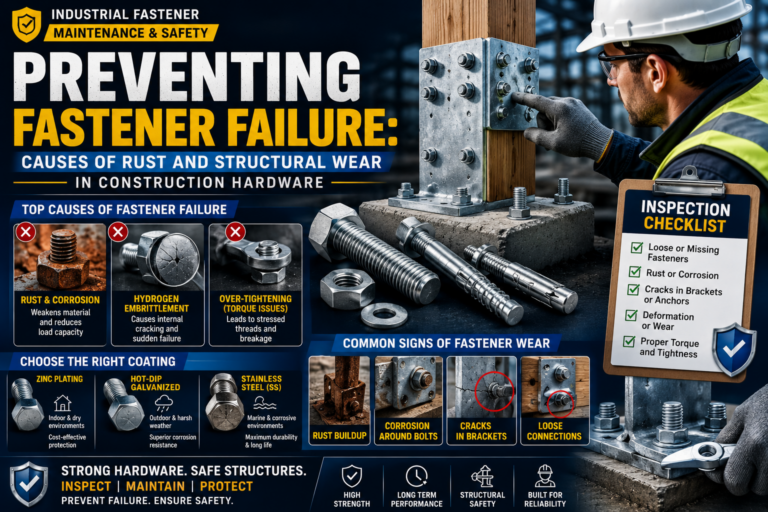
Outdoor fencing hardware is constantly exposed to rain, humidity, soil chemicals, and temperature variations. Without proper corrosion protection, metal components degrade quickly, leading to structural failure.
Hot-Dip Galvanized (HDG) steel is widely used in fencing applications due to its protective zinc coating.
Benefits of HDG Material
- High resistance to rust and corrosion
- Suitable for harsh outdoor environments
- Extends service life of structural hardware
- Reduces maintenance and replacement costs
For all outdoor fencing systems, HDG is considered a standard requirement for durability.
Conclusion
A durable timber fence depends on correct structural planning and the use of high-quality hardware. Fence brackets heavy duty, properly selected coach bolts, and reliable concrete anchors form the foundation of a stable fencing system.
When combined with Hot-Dip Galvanized protection, the entire structure gains long-term resistance against environmental stress and mechanical load.
For professional results, it is essential to choose certified building timber fence hardware designed for outdoor performance and structural safety.